
Home | Repair | Mobile Home Parts | Loans/Buy/Sell | About MHD
MHD en español | Contact | Search
Mobile Home Drains
General information and troubleshooting
Drain line problems:
- Sink drains - My ring went down the drain.
- Floor traps - Under the floor
- Main lines - Sewer line cleanout
- Frozen drains - Oh No, what do I do now?
- Venting - My house stinks.
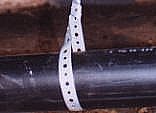
Drain lines are usually made from 3" or 4" black ABS pipe, are supposed to be supported with plumbers strap every 4' and extend from below the bathroom(s) to where the sewer line goes into the ground. They are supposed to be sloped at 1/4" per foot. Since many homes have bathrooms on opposite ends of the house, the sewer lines may be 60' or longer.

When the home is shipped from the factory it has the drain lines complete to where they extend through the belly of the home and the rest of the lines are installed by the setup crew. I have included a more complete description of the setup process but understand that it is frequently done by a contract crew arranged by the dealer.
For the setup crew, time is money, no one will look under the house once it is skirted anyhow, and they are already late for the next job. Thus, pipe joints may be slid together, not glued. Inadequate strapping, and improperly sloped lines are also common.
I have been called to homes where an improperly supported line has sagged and gradually filled with solids until it finally stopped up completely. The heavier the line gets, the more it sags, until it won't drain anymore. The first anyone notices there is a problem may be years after the installation when someone is taking a shower, someone flushes a toilet in the other bathroom and the wash machine happens to empty, all at the same time. It can make for quit a mess.
I was once called to repair a line after the homeowner snaked a drain and then noticed water was running into the street from under the house whenever they used the washer. The pressure from forcing the snake around bends was enough to push apart poorly or unglued fittings.
Troubleshooting Drains
Drains are really very simple; water runs downhill so if it won't drain, there is something blocking its path. The trick is to efficiently find out where the blockage is and then determine the easiest way to clear it. This requires some understanding of how the drain lines are laid out under your home.
Each toilet, sink tub/shower or wash machine has a drain line that goes through a trap and then down under the floor where it is combined with other nearby lines. Thus the drain lines from a bathroom sink, toilet, and tub come together under the house and continue on to the main line. Plugged lines are most frequent before or at the traps. This isn't surprising since the lines there have the smallest diameter and the most bends. In kitchens, grease buildup is the usual problem and in bathrooms it's hair. Garbage disposals are always trouble makers.
First ask yourself if just one drain is a problem of if others near it aren't working either. For example, if the toilet won't flush properly but the tub next to it drains normally, the problem has to be somewhere between the toilet and where the toilet and tub lines connect; most likely in the toilet itself. If none of the drains in an area work, but other drains in the house are OK then the problem must be in the line after it comes together under the room, but before it goes into the main line under the house. If none of the drains in the house work, the problem must be in the main line.
Frozen drains can be a problem in cold conditions under special circumstances. Normally, the volume of water from showers, toilets etc. and the fact that drain lines empty quickly means that ice buildup is not a problem, even in severe conditions. Therefore, drain lines are not normally insulated. However, in VERY cold weather when you let a faucet drip slowly to keep water lines from freezing or if you are away from home for a few days (you turned the thermostat down to save on the heating bill; right?) and have a dripping faucet the ice may accumulate to the point of blocking the line. It is not fun to unthaw frozen sewer lines!!